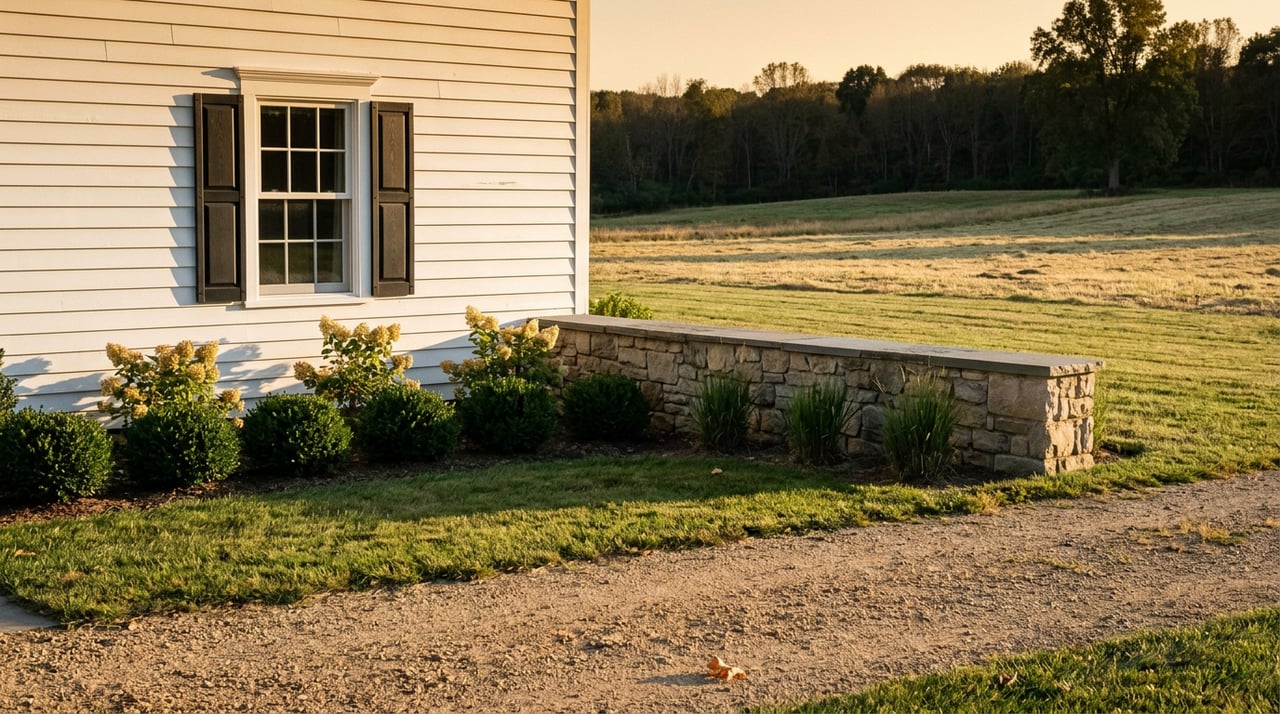
Drive the back roads around Lititz on a summer evening and you will pass more open farmland than rooftops. Corn fields run right up to the edge of Warwick Township subdivisions. It looks like room to grow. For a buyer comparing Lancaster County to other markets, that visual reads as a hedge: prices might be climbing, but there is clearly more land where that came from.
The number that doesn't match the number
Lancaster County's residential market posted a record median sold price of $385,000 in June 2026 and held that level through July, according to figures from the Lancaster County Association of Realtors reported by LancasterOnline. New listings in July ran 13.4% ahead of the same month a year earlier, a sign the market is loosening at the countywide level even as prices keep setting records.
Now look at Lititz. The ZIP code that covers Lititz borough along with most of Warwick and Elizabeth Townships and parts of Manheim, Penn, Ephrata, Clay, and East Hempfield Townships just ranked seventh nationally on this year's list of the hottest ZIP codes in America, with a median listing price of $598,000 for the first half of 2026, listings drawing nearly four times the national average in views, and a median of 28 days on market, as detailed in LancasterOnline's coverage of the ranking.
The two figures differ by about 55%, but one is the county's sold-price median and the other is Lititz's listing-price median. They are not a direct comparison of what buyers paid; the gap is one sign of the supply constraint described here.
| Metric | Lancaster County (July 2026) | Lititz / ZIP 17543 (H1 2026) |
|---|---|---|
| Median price | $385,000 (sold) | $598,000 (listed) |
| Days on market | Not stated | 28 days |
| Buyer demand | New listings up 13.4% YoY | Nearly 4x national average views per listing |
| Affordability | Not separately broken out | Local incomes run about 18% short of what's needed to buy the typical home there |
The land that already has an owner
Lancaster County has spent more than four decades paying farmers to permanently give up the right to develop their land. Two programs run the effort. The county's own Agricultural Preserve Board, created in 1980 and operating a purchase program since 1983, buys development rights directly. The nonprofit Lancaster Farmland Trust, formed in 1988, does the same work privately, largely for farms owned by Amish and Mennonite families who prefer not to work through a government program.
Between the two, the county now protects roughly 30% of its working farmland from conventional residential subdivision, according to Lancaster Farmland Trust's own accounting. That share climbs almost every month. In June 2026, the county commissioners approved two more deals, adding 128 acres to the preserved roster and pushing the county total to nearly 126,000 acres, as LancasterOnline reported at the time. One of those deals, an 88.3-acre farm in Martic Township owned by Douglas and Jonelle Metzler, settled at $2,600 per acre, half the appraised value. The other, a 40-acre parcel in Mount Joy Township owned by Joel and Kimberly Brandt, hit the county's per-acre payment cap of $4,000, itself 39% below appraisal.
Once a farm signs one of these agreements, called an Agricultural Conservation Easement, the restriction runs with the land forever, regardless of who owns it next. According to the Agricultural Preserve Board's own program page, preserved land may be used only for farming, with narrow exceptions for the farm family's own housing. A parcel preserved before 2009 can only be split into lots of 50 acres or larger. Preserve it in 2009 or later and the minimum jumps to 75 acres. These rules sharply limit conventional residential development.
Why the price of the land itself doesn't fall
Here is the part that surprises most buyers. You would expect a legal restriction that removes the most valuable possible use of a piece of land, converting it to houses, to tank what that land sells for. It mostly doesn't. Lancaster Farmland Trust states plainly that preserved farms in the county commonly sell at prices comparable to unpreserved farms, because working farmers still compete hard for good soil regardless of whether it carries an easement.
That detail matters for how you read the county's farmland at all. The open fields outside Lititz aren't sitting there waiting for a developer's offer to eventually make sense. Many of them are locked in, and the buyer pool for that locked-in land is other farmers, not homebuilders. The land supply that would normally respond to rising demand by turning into new subdivisions is sharply constrained across roughly a third of the county's agricultural base, no matter how strong that demand gets.
That is the mechanism behind the number. Demand for space near a major East Coast job corridor keeps building. The county has much less room to answer demand with new lots on preserved ground. So the demand pools instead into the handful of already-built, walkable towns with existing infrastructure and a recognizable name, and Lititz is the clearest current example of what that pooling looks like once it shows up in a national ranking.
What this means if you're comparing Lancaster County to somewhere else
A countywide median price is a real number, but it blends two different markets that behave nothing alike. One is the broader county, where new listings are up and the record median, while real, still leaves room to negotiate. The other is a short list of established small towns where scarcity is structural rather than cyclical, and where buyers are already showing up with larger down payments and stronger credit to compete for a limited supply that isn't expanding.
If you're touring land near one of these towns and the listing mentions acreage that looks like future potential, ask directly whether the parcel carries an Agricultural Conservation Easement. It's a matter of public record at the Recorder of Deeds, and the answer changes what you're actually buying. A buildable 5-acre lot and a preserved 75-acre farm can sit next to each other and look identical from the road while representing two completely different transactions.
Frequently asked questions
Does an agricultural easement lower what a farm sells for? Not reliably. Lancaster Farmland Trust reports that preserved farms in the county commonly trade at prices comparable to unpreserved farms, since farmers pay top dollar for productive soil whether or not development rights are attached.
Can preserved farmland ever become house lots? Only within narrow limits. Farms preserved before 2009 carry a 50-acre minimum for any agricultural subdivision. Farms preserved in 2009 or later carry a 75-acre minimum. Lancaster Farmland Trust says most easements permit one additional residence for family members, while agricultural subdivisions remain subject to the acreage minimums above.
Why Lititz specifically, and not some other Lancaster County town? The ranking methodology behind the national hottest ZIP list weighs buyer views per listing against how fast homes sell. Lititz combines an established, walkable downtown, existing infrastructure, and a surrounding supply of buildable land that keeps shrinking as preservation deals close nearby, a combination fewer towns in the county can currently match.
If you're weighing Lancaster County against other parts of the tri-state area, or trying to figure out what a specific parcel's easement status actually means for your plans, The Lacey Real Estate Group can walk through the deed history and local zoning with you before you write an offer. Get Your Free Home Valuation and let's talk through what your money actually buys here.
This article is general information, not legal, tax or financial advice. Consult a qualified professional about your situation.